Introduction
Many readers know Calf Notes for the numbered Notes on colostrum, nutrition, health, and calf management. A less obvious – and truly fabulous – resource is the Calving Ease archive. It contains 305 issues written from January 1995 through April/May 2020. Most are only two pages long. Each begins with a practical question, explains why it matters, and finishes with things a calf raiser can actually do. Visit the complete archive at Calfnotes.com.
Calving Ease was the work of Dr. Sam Leadley. Sam died on July 2, 2020, but the collection remains one of the most useful practical libraries on calf and heifer management. This Calf Note is both a reminder that the archive is available and a tribute to the man who created it.
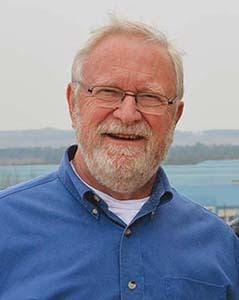
Who was Sam Leadley?
Sam combined academic training, hands-on calf care, and an extraordinary talent for teaching. He earned B.S., M.S., and Ph.D. degrees from Cornell University in 1957, 1964, and 1967. After working at Penn State University and spending years raising calves on a large dairy, he began specializing in calf and heifer management in 1988.
At Attica Veterinary Associates in western New York, Sam served as the calf and heifer management consultant. He wrote Calving Ease, the Calf Facts resource library, the Calf Care Skills materials, and the Calves with Sam blog. He taught classes and workshops across North America and Europe and consulted with farms in Asia, Europe, and North and South America. His colostrum quality-control work applied total quality management and HACCP principles to everyday calf care – long before “process control” became a common expression on dairies.
Sam also contributed to the Dairy Calf and Heifer Association (DCHA), which began in 1996 as the Professional Dairy Heifer Growers Association and adopted its present name in 2004. He served on the committee that developed the third edition of the DCHA Gold Standards. His well-known “5 C’s” – Colostrum, Cleanliness, Comfort, Calories, and Consistency – summarized his practical philosophy remarkably well. I knew Sam as a friend, colleague, and inspiration, and working with him at workshops and conferences was one of the great pleasures of my professional career. We shared a few training sessions together in New York, working together to blend the science (from my perspective) with the practical application (Sam’s expertise). We had a great time working together, and for those few meetings, we made a great team.
What is in the archive?
I reviewed the titles of all 305 issues and grouped them into the major subjects below. Because Sam routinely connected nutrition, health, housing, sanitation, and people, categories overlap and some issues appear in more than one group.
| Topic | Issues | Topic | Issues |
| Colostrum/passive immunity | 48 | Health/disease/treatment | 86 |
| Milk/milk replacer | 23 | Cleaning/sanitation | 26 |
| Starter, water, rumen development | 34 | People/protocols/records | 40 |
| Weaning/transition | 21 | Calving/newborn care | 23 |
| Housing/environment | 36 | Older heifers | 9 |
Some highlights
Colostrum. The 48 colostrum and passive-immunity issues cover feeding quickly, supplying enough IgG, testing quality, feeding methods, storage, bacterial control, and checking passive transfer. The September 2019 issue translated research on feeding at birth versus 6 or 12 hours later into a simple message: earlier feeding materially improves IgG absorption. That remains relevant today.
Milk, starter, water, and weaning. Sam returned repeatedly to milk replacer concentration, mixing temperature, feeding consistency, seasonal energy needs, bottle technique, and the opportunities and risks of feeding more milk. Other issues connect free-choice water and starter intake with rumen development. The weaning articles emphasize gradual milk reduction, adequate starter intake, growth, and careful transition management.
Housing and environment. Thirty-six issues address bedding, ventilation, drafts, ammonia, group housing, crowding, and hot- and cold-weather care. In “Needed: Good Air,” Sam advised evaluating air where the calf breathes, not where the caretaker stands, and considering ammonia, humidity, temperature, moisture, and pathogen load together. His goals were clean air, dry bedding, draft protection, and enough energy for the weather.
Health and sanitation. The largest group addresses scours, pneumonia, coccidiosis, Salmonella, Cryptosporidium, BVD, dehydration, navel infections, dystocia, biosecurity, early detection, and treatment success. Twenty-six sanitation articles cover water temperature, detergents, disinfectants, feeding equipment, bacterial cultures, and verification tools. Sam understood that prevention is the accumulated result of ordinary jobs done correctly.
People and process. Forty issues focus on communication, measurement, records, calibration, protocols, and training. In the 2016 issue on protocol drift, Sam recommended observing the job, confirming that workers have the necessary time and tools, giving immediate feedback, retraining routinely, accounting for language and literacy, and making the correct procedure easy to follow. His final issue used a simple training cycle: demonstrate, practice, and evaluate.
Old does not mean obsolete
Specific recommendations for drugs, vaccines, diagnostic thresholds, products, and regulations should be checked against current veterinary guidance and DCHA standards. The fundamentals have changed much less: prompt, clean colostrum; accurately mixed milk; water and starter; dry bedding; fresh air; early disease recognition; and trained people. Used alongside current standards, Calving Ease remains a working library of training topics, checklists, and practical questions – not a museum shelf.
Summary
Sam Leadley turned science and field experience into clear, usable instruction. These 305 issues preserve that gift; choose a topic and share an issue with someone who cares for calves. The complete Calving Ease archive is available here. The issues are available in English only, but current methods of translation should be useful to “get the message” that Sam was trying to convey.
Selected sources: Calving Ease archive; Attica Veterinary Associates: Sam Leadley; Attica Veterinary Associates, August 2020; DCHA history; DCHA Gold Standards; Four-State proceedings, 2018