Introduction
The Calf Notes family of educational resources has grown to include the new video series “What’s Happening?” – a series of videos that describe an interesting – and educational – photo or video that Jim collected during his 40+ year career in working with young calves. This series of Calf Notes will reprise the first “season” of What’s Happening? episodes… this Note will review Episode #2 – “Taxis”.
Episode Two
The title of Episode 2 is “Taxis”, and describes those methods of moving calves from the maternity area to a second location for feeding colostrum prior to moving to a hutch or group pen. Taxis are often wheelbarrows, sleds, wagons, or other means of transport for the newborn calf.
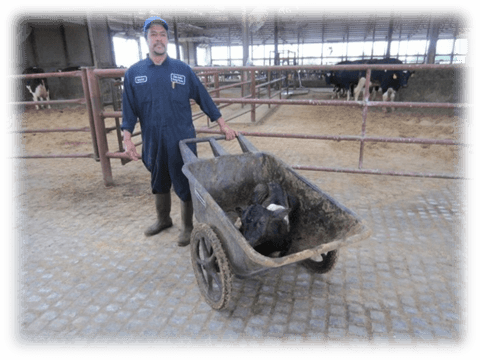
Episode 2 begins with a photo of a worker moving a newborn calf from a maternity pen to a plastic hutch about 30 minutes after the calf was born. Shortly after the calf arrived in the hutch, it was fed colostrum according to the farm’s protocol. The farm was located in the central part of the United States, just outside of Indianapolis, Indiana.
What’s Happening?
So, what was happening on this farm and with this “Taxi”? Why is it worthy of mention? The answer to these questions lies in the cleanliness of the taxi and the sensitivity of the newborn calf. Let’s investigate!
Newborn calves enter the world with virtually no immune protection of their own. What happens in the first hour or two after birth has a lasting impact on their health, growth, and survival. One of the most overlooked details during this critical window is cleanliness—especially when calves are moved from the maternity area to their first housing.
On many farms, calves are transported using a wheelbarrow or similar device commonly referred to as a “calf taxi.” While convenient, these taxis are often used for multiple purposes and may not be cleaned regularly. Dirt, manure, and organic buildup inside a calf taxi can expose newborn calves to harmful bacteria at the worst possible time—before they have received colostrum and the protective antibodies it provides.
This matters because what reaches the calf’s intestine first largely determines early health outcomes. If bacteria from a dirty environment arrive before immunoglobulins from colostrum, the calf is far more likely to become sick. Even an excellent colostrum program can be undermined by poor hygiene during transport.
Examples from farms around the world show that better options exist. Stainless steel calf taxis that are cleaned after every use are far easier to sanitize than plastic models, which can become scratched, damaged, and impossible to fully disinfect over time. The same principle applies to sleds or other transport tools—clean, smooth, and dedicated equipment is always preferable to worn or multi-use alternatives.
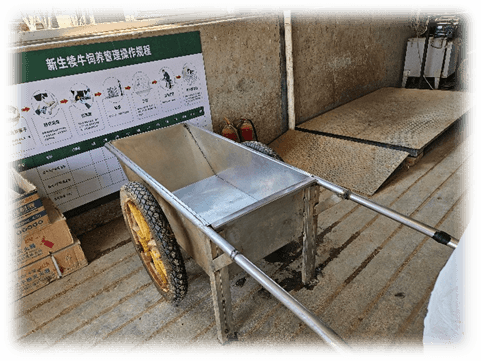
The takeaway for producers and students is straightforward: details matter. Clean calving areas, clean hands, clean feeding equipment—and clean calf taxis—work together to reduce disease risk. Treating newborn calves with a “white glove” approach during those first moments sets them up for better health and performance.
Calves crave cleanliness, especially right after birth. Paying attention to small management details, like keeping a clean taxi, pays dividends in healthier calves and fewer problems down the road.
Conclusion of Episode Two
Episode Two ends by providing several resources for more information regarding the need for cleanliness in the first few hours of the calf’s life. There are URL’s available to quickly find more useful information.
The video is just over four minutes in length and informative as well as entertaining. Don’t miss it! You can view Episode Two and links to the entire first Season of What’s Happening? in English here and in Spanish here.
What’s Happening? has been great fun to make and a new contribution to the Calf Notes mission of “Helping Calves grow”. Stop by and take a look at Episode Two and the rest of the first Season. I’m sure you’ll enjoy them!